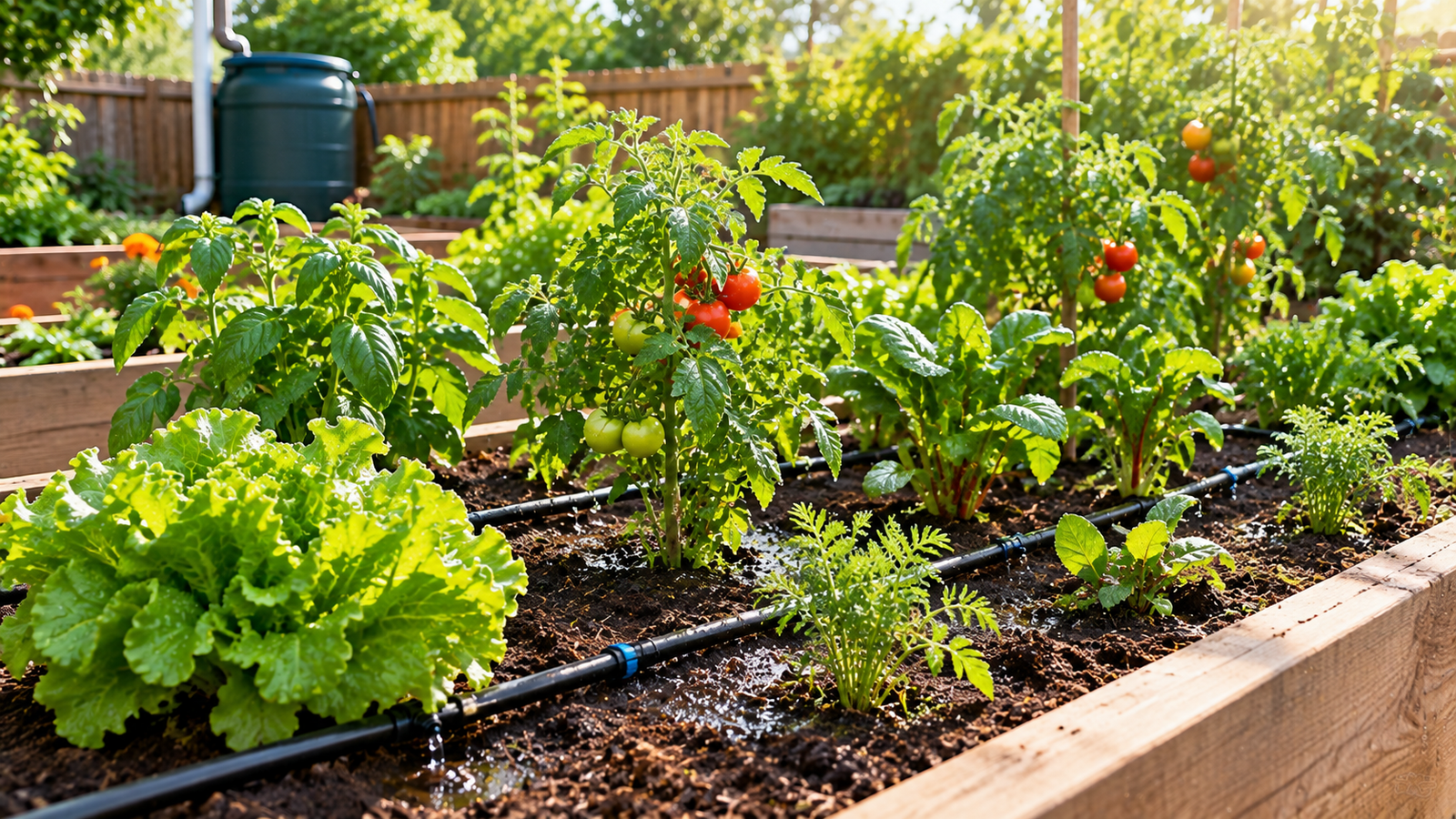
How to Water Your Home Garden Correctly: A Practical Guide
Water is essential for plant growth, but watering more often doesn’t necessarily mean a healthier garden.
Plants need enough moisture to maintain growth, transport nutrients, and perform photosynthesis. However, excessive watering can reduce oxygen around roots and create conditions that favor certain diseases.
Learning when and how to water is therefore one of the most important skills for a home gardener.
Check the Soil Before Watering
Don’t automatically water simply because it is morning or because you watered yesterday.
Check the soil around the root zone.
If it is still adequately moist, additional watering may not be necessary. If it is dry several inches below the surface, plants may need water.
Deep Watering Is Often Better Than Frequent Shallow Watering
Frequent light watering can encourage roots to remain close to the soil surface.
For many established vegetables, deeper watering at appropriate intervals encourages moisture to penetrate farther into the root zone. Purdue guidance notes that deeper watering is generally preferable to frequent shallow watering for home vegetable gardens.
However, watering needs vary according to:
- Soil type
- Weather
- Plant species
- Plant age
- Container size
- Rainfall
- Temperature
Water at the Base
Whenever practical, deliver water directly to the soil around the plant.
Drip irrigation and soaker hoses can be useful because they deliver water near the root zone while keeping foliage relatively dry.
Wet leaves that remain wet for extended periods can create more favorable conditions for some diseases.
Morning Is Often a Good Time
If you must use overhead irrigation, morning is generally preferable to late evening because foliage has more time to dry.
Containers Need More Attention
Container plants can dry out faster than plants growing in the ground.
Small containers, windy conditions, high temperatures, and direct sunlight can increase water loss.
Check container soil regularly rather than following a fixed schedule.
Use Mulch to Conserve Moisture
A suitable layer of organic mulch can reduce evaporation from the soil surface.
Mulch can also moderate soil temperatures and suppress weeds.
Don’t Ignore Drainage
Watering a plant frequently doesn’t help if excess water cannot drain away.
Make sure containers have drainage holes and avoid planting moisture-sensitive plants in permanently saturated areas.
Final takeaway: Good watering isn’t about giving plants the maximum amount of water. It is about providing the right amount at the right time while maintaining healthy soil and drainage.
