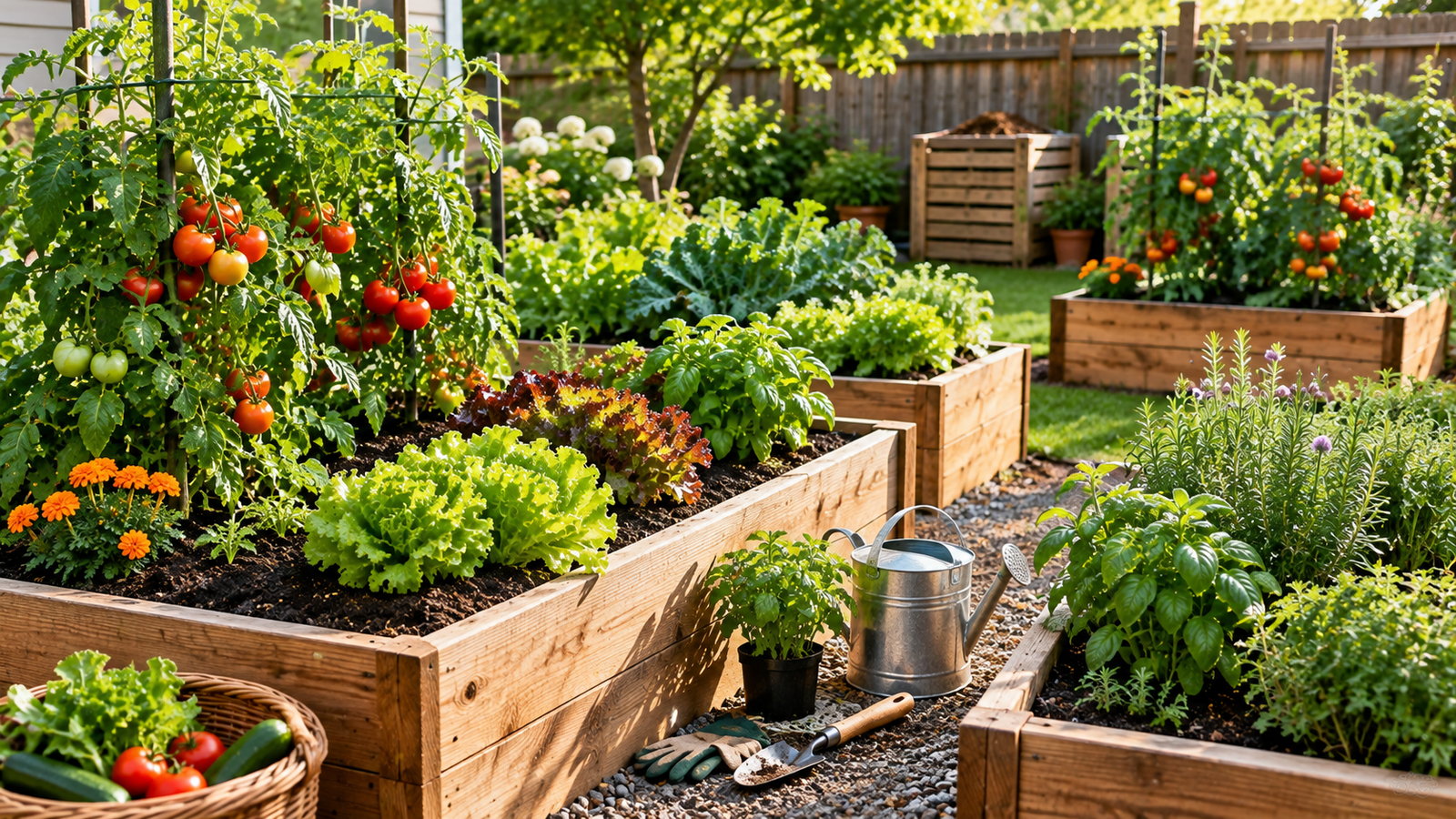
How to Build a Raised Garden Bed: Complete Beginner’s Guide
Raised beds are an excellent option for gardeners who want greater control over their growing area.
They can be particularly useful where existing soil is compacted, contaminated, poorly drained, or difficult to work.
Raised beds also make it easier to create defined planting areas and manage soil amendments.
Choose the Right Location
Start with sunlight.
Most vegetables need substantial direct sunlight, although some leafy crops tolerate more shade.
Choose a location that is also convenient for watering and regular maintenance.
A garden that is difficult to reach is much harder to maintain consistently.
Choose Your Bed Size
Avoid making the bed so wide that you have to step inside it.
A practical design should allow you to reach the center from the edges.
The exact dimensions depend on your available space and the materials you use.
Choose Safe Materials
Common raised-bed materials include:
- Untreated wood
- Stone
- Bricks
- Concrete blocks
- Metal garden beds
Avoid materials that may release unwanted chemicals into the soil.
Prepare the Ground
Remove persistent weeds before constructing the bed.
Check drainage and make sure the area doesn’t remain waterlogged.
Fill the Bed Correctly
Don’t automatically fill a raised bed with pure compost.
A balanced growing environment should provide appropriate structure, drainage, organic matter, and nutrient availability.
Compost is best treated as an amendment rather than a universal replacement for soil. Penn State Extension specifically discusses compost as something that can be mixed with garden soil or appropriate growing mixes.
Add Compost
Finished compost can contribute organic matter and improve soil characteristics.
However, avoid excessive applications.
Plan Your Plants
Before planting, draw a simple map.
Consider:
- Mature plant size
- Sunlight
- Root space
- Plant spacing
- Water requirements
- Vertical support
Protect the Bed With Mulch
Once planted, mulch can help protect the soil surface and reduce weeds.
Maintain the Bed
Each season:
- Remove unhealthy plant debris.
- Add appropriate organic matter.
- Check soil condition.
- Inspect for pests.
- Rotate crops where practical.
Final takeaway: A raised bed isn’t automatically a better garden. Its advantage comes from giving you greater control over soil, drainage, spacing, and maintenance.
