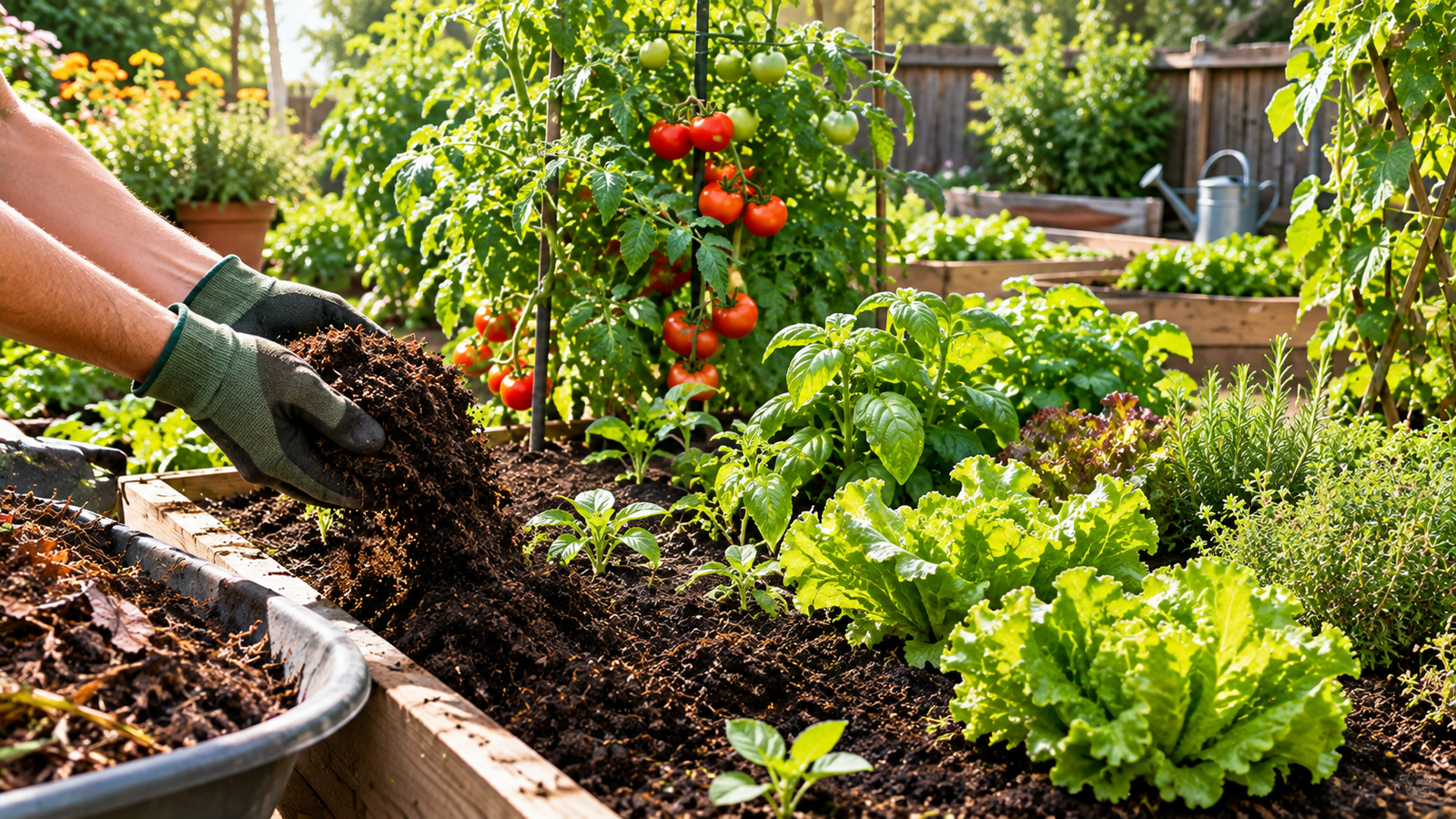
How to Improve Garden Soil Naturally: A Complete Guide for Healthy Plants
Healthy soil is the foundation of a successful home garden. Whether you are growing vegetables, herbs, flowers, or fruit plants, the condition of the soil directly affects root development, water availability, nutrient uptake, and overall plant health.
Many gardening problems that appear to be caused by fertilizer, pests, or watering actually begin with poor soil. Soil that is heavily compacted may restrict roots, while soil with poor drainage can remain excessively wet. Sandy soil can drain quickly and may struggle to retain moisture and nutrients.
The good news is that soil can often be improved gradually with organic matter, appropriate watering, mulching, and careful management.
Why Soil Quality Matters
Soil isn’t simply something that holds a plant upright. It contains minerals, organic matter, water, air, microorganisms, and plant roots.
Healthy soil provides roots with access to water and oxygen while supplying nutrients required for plant growth. Soil pH also affects the availability of nutrients, which is why soil testing can be more useful than guessing what amendments your garden needs.
Start With a Soil Test
Before adding large quantities of fertilizer or amendments, consider testing your soil.
A soil test can provide information about:
- Soil pH
- Nutrient levels
- Organic matter
- Fertility requirements
- Possible nutrient deficiencies
Testing helps you make decisions based on actual soil conditions rather than assumptions.
Add Organic Matter
Compost, aged organic materials, and suitable plant-based amendments can improve many soils.
Organic matter can help:
- Improve soil structure
- Increase water-holding capacity
- Improve drainage in some heavy soils
- Support soil organisms
- Make soil easier to work
Penn State Extension recommends incorporating appropriate organic matter into garden soil and notes that organic matter can improve soil structure and water and nutrient retention.
Don’t Overwork Wet Soil
One commonly overlooked mistake is working soil when it is too wet.
Wet soil, particularly clay or silt soil, can become compacted when repeatedly walked on or dug. This can damage the structure you are trying to improve.
If soil sticks together in a muddy mass when squeezed, it may be better to wait until it becomes workable.
Use Mulch
Organic mulch protects the surface of the soil from excessive evaporation and temperature fluctuations. It can also suppress weeds.
Suitable mulch materials may include:
- Shredded leaves
- Straw
- Bark
- Wood-based materials
- Grass clippings when appropriately managed
Avoid Adding Fertilizer Without a Reason
More fertilizer does not automatically produce healthier plants.
Excess nutrients can create problems and may contribute to environmental pollution. Use soil-test recommendations when available and follow fertilizer-label directions.
Improve Soil Gradually
Don’t expect poor soil to become perfect overnight.
Add organic matter, protect the soil surface, avoid unnecessary compaction, and maintain appropriate moisture.
Over several seasons, these practices can make your garden easier to manage and more productive.
Final takeaway: The healthiest gardens begin with healthy soil. Test when appropriate, add organic matter thoughtfully, protect the soil with mulch, and improve it gradually.
